Long before mammals, reptiles, or birds roamed Earth’s surface, another predator stalked the floodplains.
It wasn’t a dinosaur… it was a scorpion.
And not a small one, either.
Fossils of the creature dating to around 415 million years ago from the UK were first described back in the 1870sand since then, scientists have been arguing over what exactly they were looking at.
A recent analysis published in the journal Palaeontology – using CT scans combined with old-school camera lucidum tracings – has settled it.
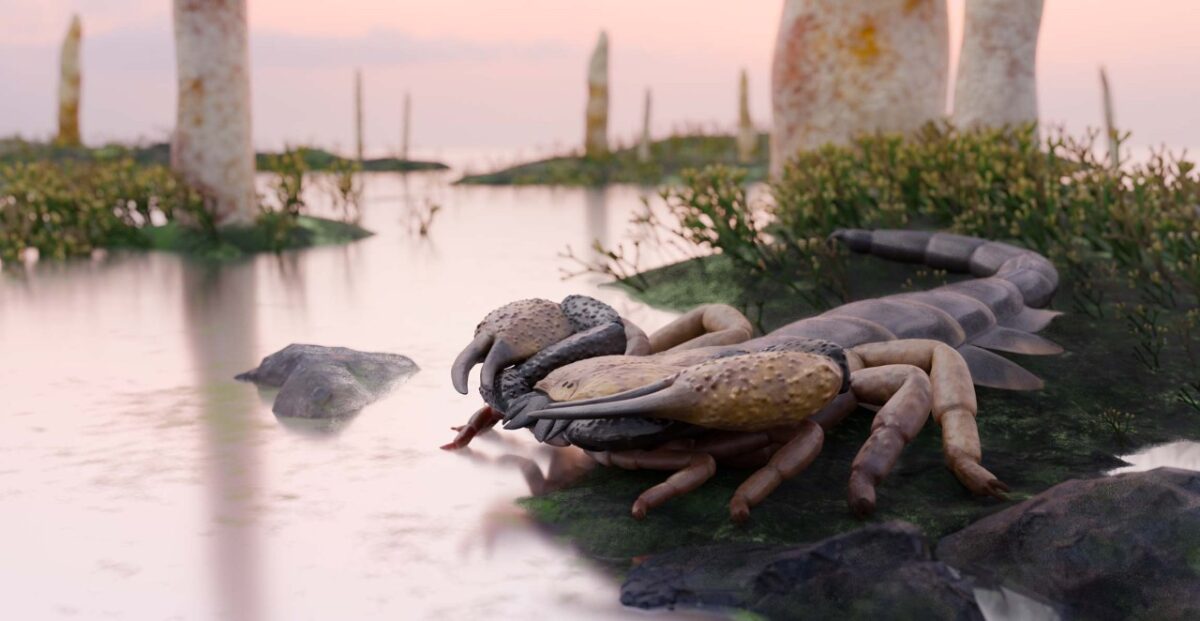
The creature is called Praearcturus gigasand it may be the biggest scorpion ever to have lived.
Its pincers alone measured 16 centimeters (6.3 inches) long – longer than the entire body of many scorpions alive today.
“This species might have grown so big because there weren’t any other large predators, allowing it to dominate its environment.” – paleontologist Richie Howard
The whole animal is estimated to have stretched past a meter (3.3 feet), roughly the size of a medium dog.
And that’s enough information to make me very glad to not be alive back then.
“Pre-closer lived when life on land was just starting out, and the ancestors of reptiles, mammals and birds were yet to leave the water,” says lead researcher Richie Howard, a paleontologist at the UK’s Natural History Museum.
“It suggests that this species might have grown so big because there weren’t any other large predators, allowing it to dominate its environment.”
In other words: no competition, no rules.
The team also compared the UK fossils against specimens of the ancient scorpion Eramoscorpius from Canada (shown below), confirming where P. gigas sits in the scorpion family tree.
If you thought things couldn’t get creepier, they found ridge patterns on one of its limbs, evidence it may have made sound by rubbing its own body parts together – a trick called stridulation that some scorpions still use today.
Land, though, wasn’t fully built up yet. There wasn’t much of an ecosystem up there to rely on.
So this giant probably hedged its bets, spending time in the water too.
Fossils from Wales show flap-like structures called epimera on the animal’s body, similar to features found on modern lobsters and crabs.
Related: There’s One Predator That Terrifies Bears And Mountain Lions Alike
Howard and his colleagues think P. gigas hunted on both land and in water, wherever the prey happened to be.
That advantage wouldn’t last.
Millions of years later, land filled up with millipedes the size of cars and dragonflies as big as birds of prey, in forests that hadn’t even existed yet when P. gigas was around.
Rising competition for food may have pushed the giant scorpion into decline, though researchers think it could have held on for another 40 million years past the age of these fossils before disappearing for good.
Related: Bizarre ‘Vampire Camel’ Discovered in Museum Fossils Collected Decades Ago
There’s still a bigger question hanging over all of it: how a lineage of air-breathers ended up back in the water in the first place.
“Our best family trees from DNA sequences suggest that scorpions are closely related to other arachnids with which they share book lungs, such as the spiders,” says paleontologist Greg Edgecombe, also from the Natural History Museum in the UK.
“This predicts that they are descended from an air-breathing ancestor.
“If this is the case, then Pre-closer is an example of an animal that likely returned to the water after its ancestors moved onto land.”
The research has been published in Palaeontology.
This article was fact-checked by Rebecca Dyer and edited by Rebecca Dyer. While we pride ourselves on our process, we are only human. If you spot a mistake, please let us know.
Source: www.sciencealert.com