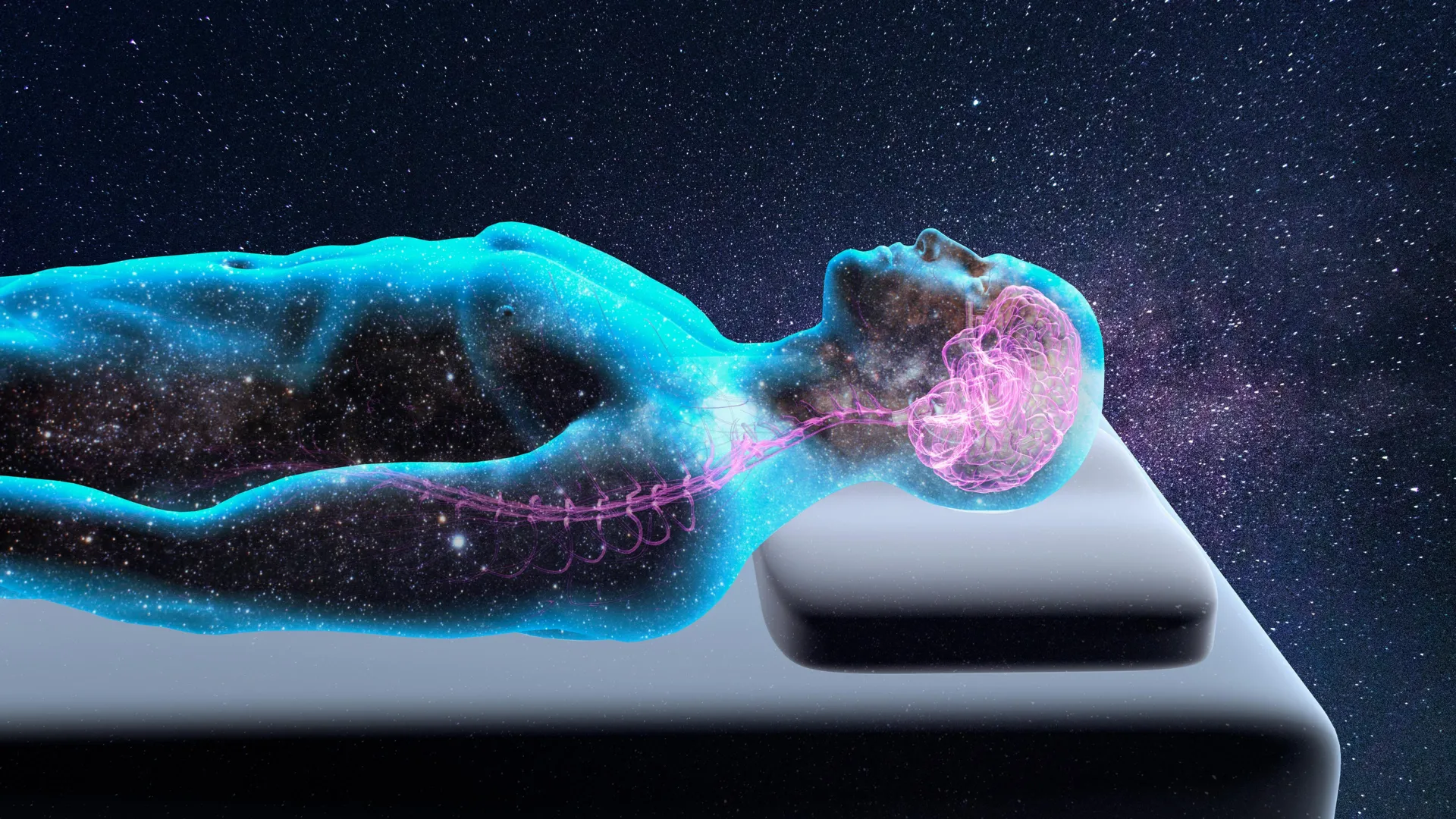

Why does being awake for too long make us increasingly desperate for sleep? Scientists at the University of Basel in Switzerland have identified two groups of brain cells in mice that become more active the longer the animals remain awake. These neurons play a critical role in creating the pressure to sleep, offering new clues about how the brain regulates our need for rest.
The longer we go without sleep, the more difficult it becomes to stay awake. This buildup of sleep pressure, often called sleep drive, helps ensure that extended periods of wakefulness are followed by longer and deeper sleep. Although sleep is essential for survival, exactly how the brain measures time spent awake and converts that information into an increasing need for sleep has remained a mystery.
Researchers led by Professor Alex Schier at the Biozentrum, University of Basel, have now identified brain cells that help regulate this process. The work was conducted in collaboration with scientists from Beth Israel Deaconess Medical Center and Auburn University.
“We have identified neuronal populations that monitor prolonged wakefulness and actively promote sleep,” says Alex Schier. “This is an important missing piece of the puzzle in understanding why we become sleepy.”
Scientists Identify Brain Cells That Drive Sleep Pressure
To investigate how sleep pressure develops, the team studied patterns of brain activity in mice under three different conditions: normal cycles of sleeping and waking, extended sleep deprivation, and recovery sleep. By comparing these patterns, they identified brain regions whose activity changed according to how long the animals had been awake.
Within one of these regions, the brainstem, researchers pinpointed two groups of neurons involved in controlling sleep drive. Known as GABAergic and serotonergic neurons, both groups became progressively more active as the mice remained awake. Their activity then decreased once the animals fell asleep.
The next question was whether these neurons simply tracked how long the mice had been awake or actually helped create the growing need for sleep.
Experiments revealed that the neurons were directly involved in driving sleep. When researchers artificially activated both groups, the mice slept longer and more deeply, showing the same type of recovery sleep normally seen after extended wakefulness. When the neurons were inhibited, however, the animals slept substantially less and were able to remain awake and alert.
“These neurons do not simply signal that an animal has been awake,” says Schier. “Our experiments show that they are crucial to promote sleep, and that they may be key components of the neural circuitry that generates sleep drive.”
The results provide particularly strong evidence that certain neurons activated during wakefulness do more than register lost sleep. They actively help generate the pressure that eventually pushes the brain toward sleep.
Mice Sleep 70% Less When Key Neurons Are Inhibited
Further experiments produced an especially surprising result. When scientists suppressed both groups of neurons for an extended period, the mice slept approximately 70% less than normal.
Even more unexpectedly, most of these animals did not display some of the serious behavioral problems typically associated with prolonged sleep deprivation. Despite getting dramatically less sleep, many avoided impairments that researchers would ordinarily expect.
These findings suggest that the identified neurons influence not only the amount of time animals spend sleeping, but also how strongly the pressure to sleep increases during wakefulness.
Rather than simply responding to exhaustion, the brain appears to use specific neural circuits to actively regulate the growing need for rest.
A New Direction for Sleep Research
Understanding these circuits could open important new avenues for studying sleep and its effects on the body. Researchers now hope to determine how the identified neurons communicate with other brain regions and what molecular processes allow them to generate sleep pressure.
“Future studies could reveal how these neurons interact with the rest of the brain, and how sleep drive is generated at the molecular level,” says Dr. William Joo, first author of the study. “Our ability to stably transform sleep behavior also allows us to explore adaptations to long-term sleep loss – this may eventually reveal ways to confer resilience to sleep deprivation and other physiological challenges.”
The findings establish that GABAergic and serotonergic neurons in the brainstem become increasingly active during prolonged wakefulness and play an essential role in promoting sleep.
Determining exactly how the brain makes sleep increasingly difficult to resist remains a major objective of sleep research. Beyond improving scientists’ understanding of sleep disorders, this discovery could help explain how the nervous system adapts to extended wakefulness and other physical challenges.
Ultimately, a clearer understanding of the brain circuits responsible for sleep pressure could inspire new treatments and potentially reveal ways to improve resilience to sleep deprivation.
Source: www.sciencedaily.com