Senators pushing a permanent US ban on Chinese cars are weighing looser rules for passive shareholders, a change that could keep Mercedes-Benz out of it.
Negotiators are close to a deal they hope to pass before the current Congress ends in January, Bloomberg reported on Nov. 19. One person close to the talks said an agreement could come as early as that week, though none had been announced by Nov. 22.
What the Bill Would Do
The bill is the Connected Vehicle Security Act of 2026 (S. 4429), introduced on April 29 by Republican Sen. Bernie Moreno of Ohio and Democratic Sen. Elissa Slotkin of Michigan, with 51 cosponsors from both parties. The Senate Commerce Committee approved an amended version in July and formally reported it on Sept. 22. It still needs votes in the full Senate and the House, where a companion bill, H.R. 8730, was introduced in May.
Chinese cars are already effectively shut out. A Commerce Department rule finalized in January 2025 bars Chinese- and Russian-linked software in connected vehicles from model year 2027 and hardware from model year 2030, and stops automakers with close enough ties to either country from selling connected cars here from model year 2027. Chinese-made EVs also face a 100% tariff. The bill would write those limits into law and widen them, which is why supporters call it a permanent ban.
Slotkin has said, “Whether you are a Democrat or Republican, no one wants Chinese cars in America.” She has also warned that letting Chinese vehicles in would signal the start of a decline for domestic auto manufacturing.
Why Mercedes Is Caught Up in It
As reported by the committee, the bill bans connected vehicles from any automaker that is a “foreign entity of concern.” That includes any carmaker in which companies or citizens of China, Russia, Iran or North Korea own or control “more than 15 percent” of the equity, votes, board seats or “other indicia of control.” The text makes no exception for passive investors and names no automakers.
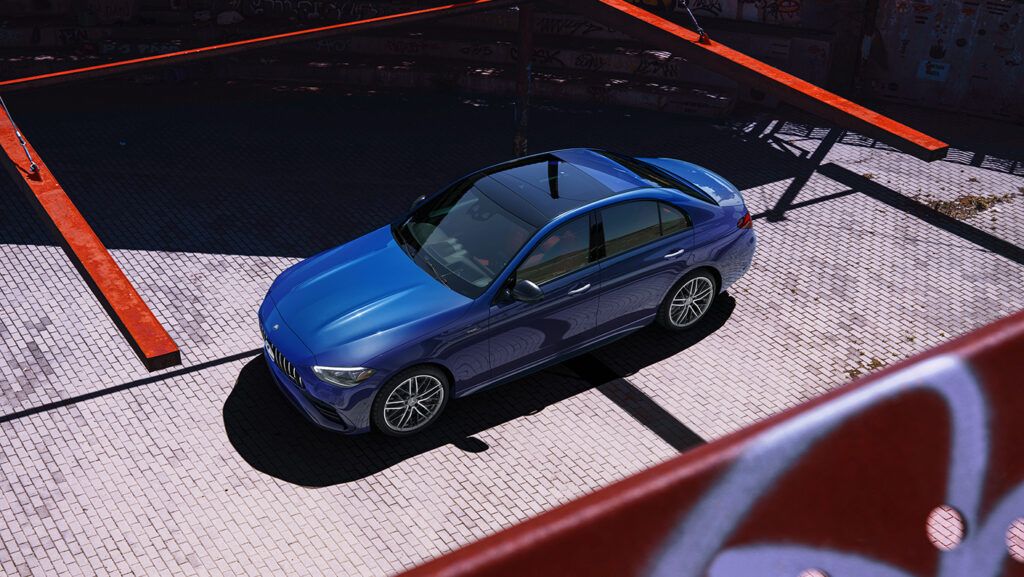
That puts Mercedes over the line. China’s state-owned BAIC Group and Geely founder Li Shufu each hold nearly 10% of Mercedes-Benz Group, about 20% combined, according to the House Select Committee on China. On Nov. 17, the committee’s Republican chairman, Rep. John Moolenaar, and its top Democrat, Rep. Ro Khanna, opened an investigation into those ties and Mercedes’ Chinese tech partners, including Hesai, Tencent and Momenta, and asked for records by Dec. 1.
The same 15% test would also cover Geely-controlled brands such as Volvo and Polestar. The committee text gives established automakers a runway, though: connected vehicles from before model year 2030 are exempt for companies that were already selling passenger vehicles in the US and had built them here for at least five years when the law is enacted, as long as they file yearly plans to comply by 2030. Mercedes has built SUVs in Alabama since the late 1990s.
The Fix Under Discussion
The bill stalled on the Senate floor on Sept. 30, when its lone holdout, Republican Sen. Rand Paul of Kentucky, “argued the legislation could unfairly sweep in Mercedes-Benz,” The Associated Press reported.
According to Bloomberg, the changes now under discussion include looser rules for companies whose Chinese shareholders hold passive stakes with no voting power. Moreno has briefed automaker representatives on them. Most were broadly supportive, though a Mercedes official voiced reservations.
Republican Sen. Katie Britt represents Alabama, where Mercedes builds SUVs for the US market. “We understand that there will be some adjustments that have to be made,” she told Bloomberg, adding that she feels good about Mercedes “continuing to be able to thrive in our state.”
Most of the industry wants the ban passed. On Nov. 3, the Alliance for Automotive Innovation, whose members include GM, Toyota and Volkswagen, urged Congress to pass it in the post-election session, Reuters reported. The group’s CEO, John Bozzella, pointed to the European Union, which imported more than 1.1 million vehicles from China in the first eight months of 2026, more than in all of 2025, and cited “the obvious national security risk and China’s pattern of unfair behavior.”
Source: www.motorbiscuit.com