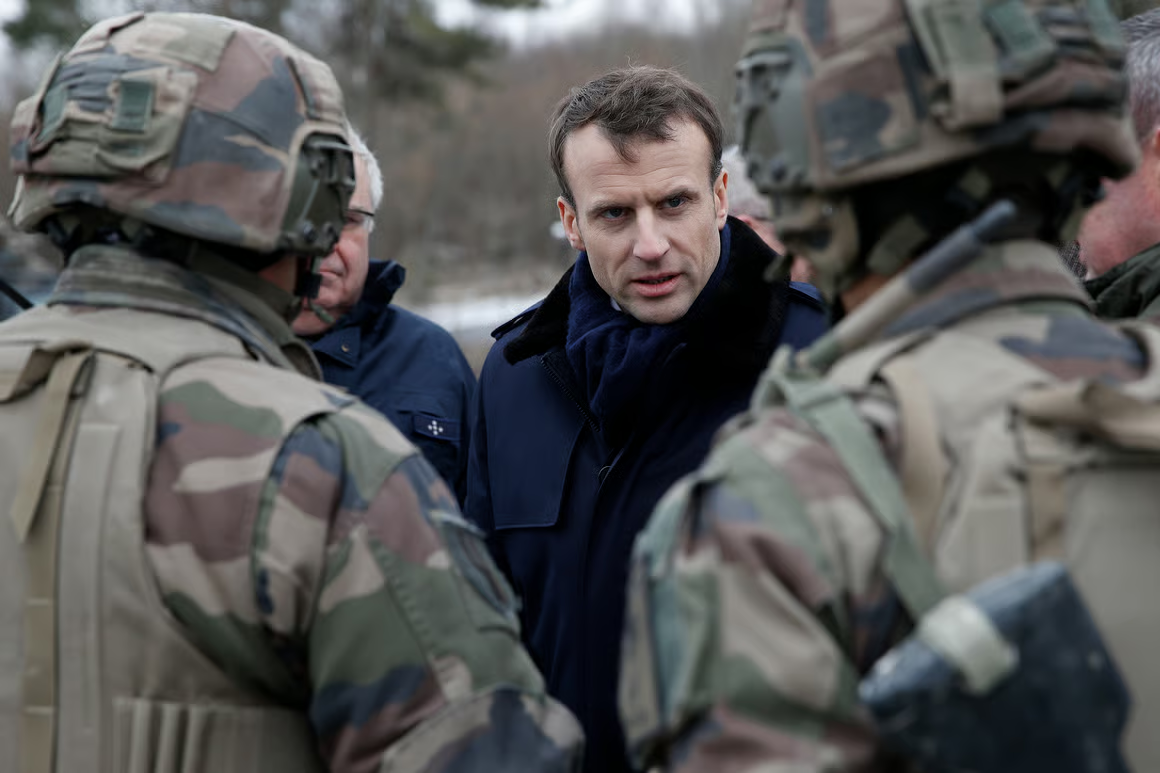

The FINANCIAL — President Emmanuel Macron warned of a new level of Russian aggression on Friday, Nov. 20, after European governments reported airspace violations, an alleged assassination plot and attempted sabotage. His intervention drew together incidents in several countries as governments tightened border controls, investigated suspected intelligence operations and consulted allies about security.
In a social media statement reported by Euronews on Saturday, the French president expressed solidarity with European partners and accused Russia of pursuing an aggressive agenda beyond Ukraine. He argued that intensifying the war and hostile activity elsewhere in Europe would deepen Moscow’s isolation and strengthen European resolve.
Le Parisien also reported Macron’s statement on Friday evening, citing his support for Poland, Denmark and Estonia. The French president specifically referred to Estonia’s decision to restrict road transit at its Russian border. He framed the incidents as a shared European security concern, rather than a series of problems confined to individual countries.
In Poland, Prime Minister Donald Tusk said Russian objects had entered national airspace and fallen near three locations during Russia’s overnight attack on Ukraine. His office identified a Kh-101 cruise missile near Nowy Lipowiec, another missile near Rudnik nad Sanem and what preliminary findings described as jet-powered drone fragments near Mołodycz.
Tusk said the objects were Russian and described the incident as a possible intentional provocation. One fell near the area of an exercise involving countries in the Coalition of the Willing, his office said. The suggested purpose of the incursions was the Polish government’s assessment; the recovered objects alone did not establish intent.
Defense Minister Władysław Kosiniak-Kamysz said nobody had been hurt in Poland and no damage to critical infrastructure had been reported. At a Warsaw briefing on Friday, he described Russian long-range aircraft launching missiles and drones against Ukraine in an attack with effects on Polish territory.
Polish F-16s and Swedish Gripens operated during the night, supported by a Dutch aerial refueling aircraft, the minister said. A Saab reconnaissance aircraft also operated in southeastern Poland. Patriot systems around Rzeszów’s Jasionka airport and near Świdnik were activated, along with other ground-based defense systems, according to the ministry.
The Polish response involved civilian and military agencies at the recovery sites, the Defense Ministry said, including police, firefighters, military police and intelligence services. Helicopters and three Territorial Defense brigades also took part. The minister named the Poprad and Pilica+ ground systems among those activated, alongside the Patriot deployments.
Tusk said he had been in contact with the defense minister, armed forces command and security services from the early morning. His office said the president was being kept informed, and he announced discussions with allies about strengthening NATO’s eastern flank. He described cooperation with the presidential office on security matters as working properly.
The military exercise taking place that day was Koalicja 26.2 at Nowa Dęba. Poland’s Defense Ministry described it as the first exercise of the Coalition of the Willing’s Multinational Force–Ukraine. Its stated purpose was to demonstrate preparations for supporting Ukraine and European security after a cease-fire or peace agreement.
The ministry listed troops from Belgium, Estonia, France, Spain, the Netherlands, Lithuania, Germany, Sweden, Turkey, Britain and Poland as participants. Land, air and maritime forces, as well as a space component, were involved. The exercise was preparation for a potential postwar mission, rather than an announcement that such a mission had begun.
Denmark’s disclosure concerned an earlier incident. In a statement published Friday, the Danish Security and Intelligence Service, known as PET, said it assessed that Russian intelligence services had planned and initiated an assassination attempt against a Ukrainian-American citizen north of Copenhagen in September.
PET said it and North Zealand Police thwarted the attempt on Sept. 25, when an attack was imminent. The intended location was a concert at a music venue attended by members of the public. Three people traveling in a car near the venue were stopped, and firearms and knives were found, the service said.
Two people had been charged with attempted murder and assisting a foreign intelligence service, PET said. It distinguished its intelligence assessment from the criminal proceedings: investigators would establish what the individuals did and knew, while a court would determine any criminal liability. The charges are not convictions.
The service did not assess the case as indicating a general assassination threat against Danish citizens or other residents. It said the intended victim was a particular target.
Estonia’s response includes a change at its eastern frontier. The government announced Friday that road crossings with Russia would be suspended from Dec. 1 at Narva-1, Narva-2, Koidula, Luhamaa and Saatse. It said the national security restriction would be reviewed after six months.
The suspension covers people and vehicles using road crossing points. Rail freight will continue under existing arrangements and restrictions, with strict customs controls, the government said.
Prime Minister Kristen Michal’s government linked the decision to hostile activities and attacks on defense businesses that Estonian intelligence attributed to Russian services. It said the road closure would reduce opportunities for recruitment and influence operations and help prevent sanctions evasion. It acknowledged that suspending crossings would not eliminate every threat.
The latest attempted attack on an Estonian defense company was described in a Nov. 15 government statement. Authorities said an attempt had been made early the previous Saturday to cause an explosion and fire at Threod Systems in Viimsi. Nobody was injured, and production and delivery capabilities were unaffected, the government said.
Eight suspects, all residents of Latvia, were detained, and prosecutors sought the pretrial detention of five, according to the statement. Estonian investigators were working with Latvia’s security service and prosecutors. Estonia’s Internal Security Service assessed that the attempted attack had been ordered by Russia’s military intelligence service, the GRU.
Michal said defense businesses had received security recommendations before and after an earlier attack on Milrem Robotics. Threod had followed that advice, he said, crediting cooperation between the company and public authorities. His account presented the absence of injuries and disruption as the outcome of preparedness and an effective response.
France has previously attributed cyberattacks and information operations to Russian actors. As The FINANCIAL reported in October, those official attributions concern specific campaigns; they do not establish that every suspicious incident or domestic protest is directed from Moscow. That earlier reporting distinguished documented operations from broader political allegations about unrest in France.
Macron’s Friday statement connected the latest disclosures to Russia’s continuing war against Ukraine. He argued that the combination of military aggression and hostile actions on European territory was an irresponsible course that would strengthen the determination of Europeans and others seeking peace. That was his political judgment about the likely response.
The immediate practical consequences in Estonia will be felt most directly in Narva and Setomaa, the government said. It identified residents with relatives, employment, property or other ties across the border among those affected. The authorities advised people currently in Russia to plan their return in advance of the road restrictions.
FAQ
Were there casualties in Poland?
Polish authorities said no casualties or destruction had been reported following the incursions. Investigators were examining objects recovered at three locations.
When will Estonia’s road restriction begin?
The announced suspension begins Dec. 1. The government plans to review it after six months, while rail freight continues under existing restrictions and customs controls.
Has the Danish case resulted in convictions?
PET’s statement described charges and an intelligence assessment. It said the courts would determine criminal liability on the evidence against each defendant.
Source: finchannel.com