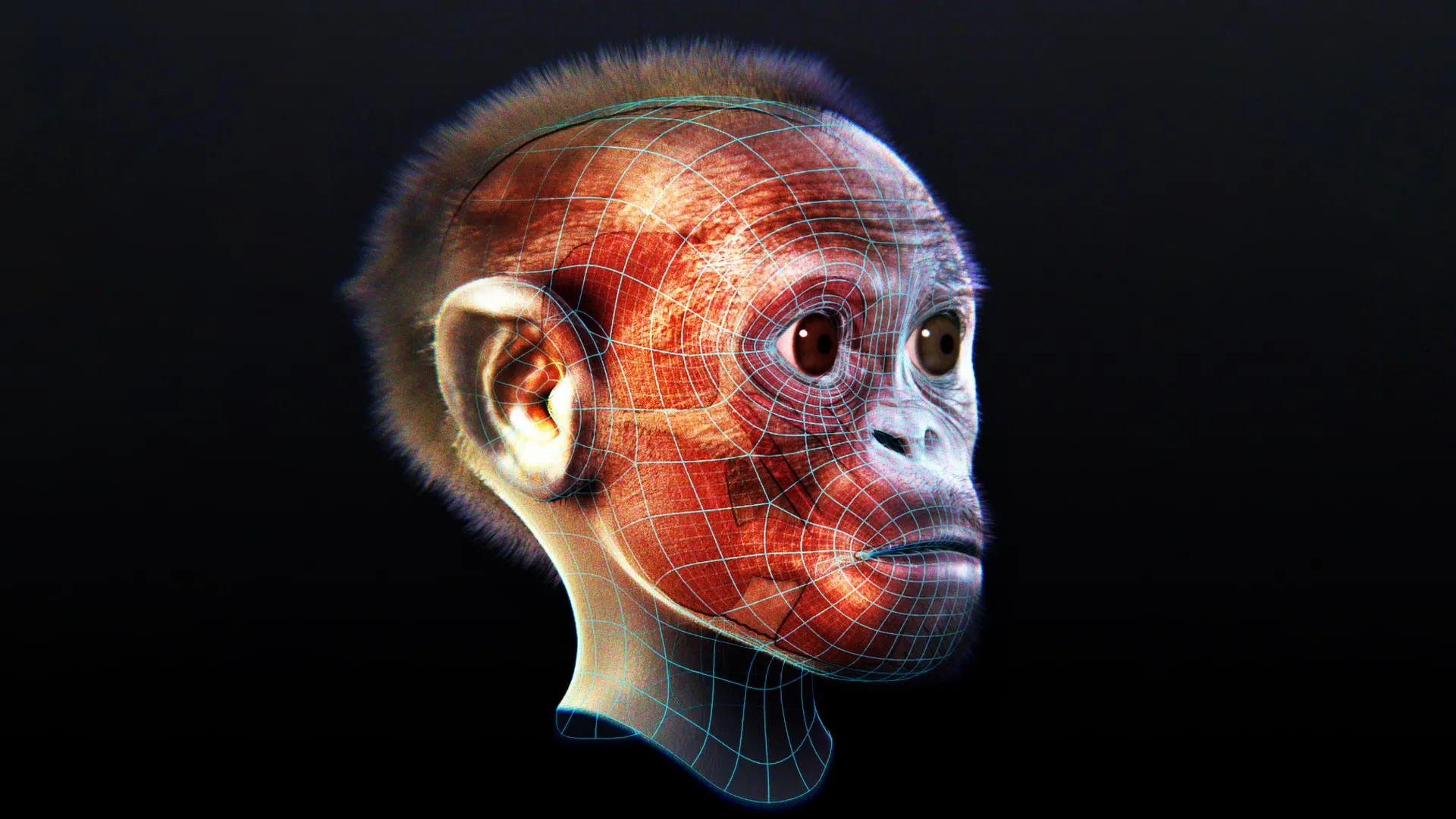

A century after the Taung Child transformed our understanding of where humans came from, scientists are discovering that this famous fossil still has surprises to reveal. A new study published in Nature dates the ancient remains to between 2.96 and 3.03 million years ago and suggests that the human family tree in southern Africa was much more complicated than previously believed.
The international study was led by Professor Gabriele Macho of the Archaeology, Environmental Changes and Geo-Chemistry (AMGC) research group at Vrije Universiteit Brussel (VUB). The findings challenge long-standing assumptions about how early human relatives evolved and how different species were related.
First discovered in South Africa in 1924, the Taung Child provided the first concrete evidence supporting the African origins of humanity. It also became the original “type specimen” used to define the species Australopithecus africanus. However, scientists never established definitive criteria for assigning later fossil discoveries to this species. As a result, the Taung Child remains the only fossil that can be identified with certainty as Australopithecus africanus.
“For over 100 years, we assumed the Taung Child was just one of many similar fossils from the era,” says Professor Gabriele Macho. “Our findings turn that on its head. The human family tree wasn’t a neat, straight trunk — it was a chaotic, tangled bush driven by climate shifts.”
Ancient Fossils Reveal a More Complex Human Family Tree
To investigate how the Taung Child compared with other early human relatives, researchers examined tooth structure and patterns of brain and dental development during growth. They found that several adult fossils traditionally classified as Australopithecus africanus followed developmental patterns that differed from those of the Taung Child.
Differences in brain development were particularly revealing. They suggest that fossils previously grouped into a single species may actually represent several distinct hominin species that inhabited the Sterkfontein region, either at the same time or during different periods.
These findings raise important questions about the diversity of our ancient ancestors and suggest that early human evolution followed a much more complicated path than scientists once assumed.
How Climate Change Shaped Human Evolution
The researchers believe that dramatic environmental changes played a major role in creating this evolutionary diversity. Millions of years ago, southern Africa experienced repeated shifts between wetter and drier climates, continually transforming the landscape and the habitats available to early human relatives.
As suitable environments expanded and contracted, ancient hominin populations moved with them. Some groups became geographically isolated and evolved along different paths, while others eventually came back into contact and interbred. These changing conditions also exposed populations to different predators and pathogens, creating additional pressures that shaped their evolution.
Southern Africa’s position along the boundary between tropical and temperate ecosystems made it especially important in this process. Over thousands of years, shifting habitats may have repeatedly brought different hominin species together, creating opportunities for interbreeding and hybridization.
A Greener South Africa 3 Million Years Ago
The study also reveals a surprising picture of the environment in which the Taung Child lived. Evidence preserved in fossilized pollen indicates that the region was once considerably wetter and more heavily forested than it is today.
Researchers identified evidence of tree species that are now found hundreds of kilometers to the northeast, suggesting that the landscape surrounding the Taung Child was dramatically different from modern South Africa.
Together, these discoveries challenge the traditional view of human evolution as a relatively straightforward progression from one species to another. Instead, they point to a shifting network of populations that repeatedly separated, adapted, reunited, and sometimes interbred as environmental conditions changed.
More than 100 years after its discovery, the Taung Child is once again transforming our understanding of human origins. Its latest secrets suggest that the emergence of our own genus, Homowas preceded by a far more diverse and interconnected world of ancient human relatives than previously recognized.
Source: www.sciencedaily.com