
Pony.ai’s robotaxi revenue rose 165.4% and robotruck revenue 76.3% in the third quarter, lifting total revenue 75.2% to US$44.6m
Pony.ai’s third-quarter revenue rose 75.2% year on year to US$44.6m, with its robotaxi business more than doubling and its robotruck operations growing almost as fast. Robotaxi services revenue climbed 165.4% to US$17.8m as fare-paying rides expanded, while robotruck revenue rose 76.3% to US$18.0m, keeping freight narrowly ahead as its largest business.
Pony.ai’s robotaxi fleet reached 2,768 vehicles at the end of September, against a target of 3,500 in 20 cities by year end, and fare-charging revenue rose by nearly 400%. All three of its Gen-7 models, developed with BAIC, GAC and Toyota, are now in fully driverless commercial operation, and its contiguous operating area in Guangzhou now exceeds 1,000 square kilometres, while it has begun deployment in Hangzhou, Chongqing and Hengqin.
Overseas, Pony.ai began Europe’s first fully driverless test rides with invited passengers in Zagreb in September and has started road testing in Manchester ahead of deployments there and in London. It cites a pipeline of more than 4,000 robotaxis under agreements in negotiation internationally, and has signed a memorandum of understanding with inDrive and NVIDIA to explore robotaxi operations in Kazakhstan.
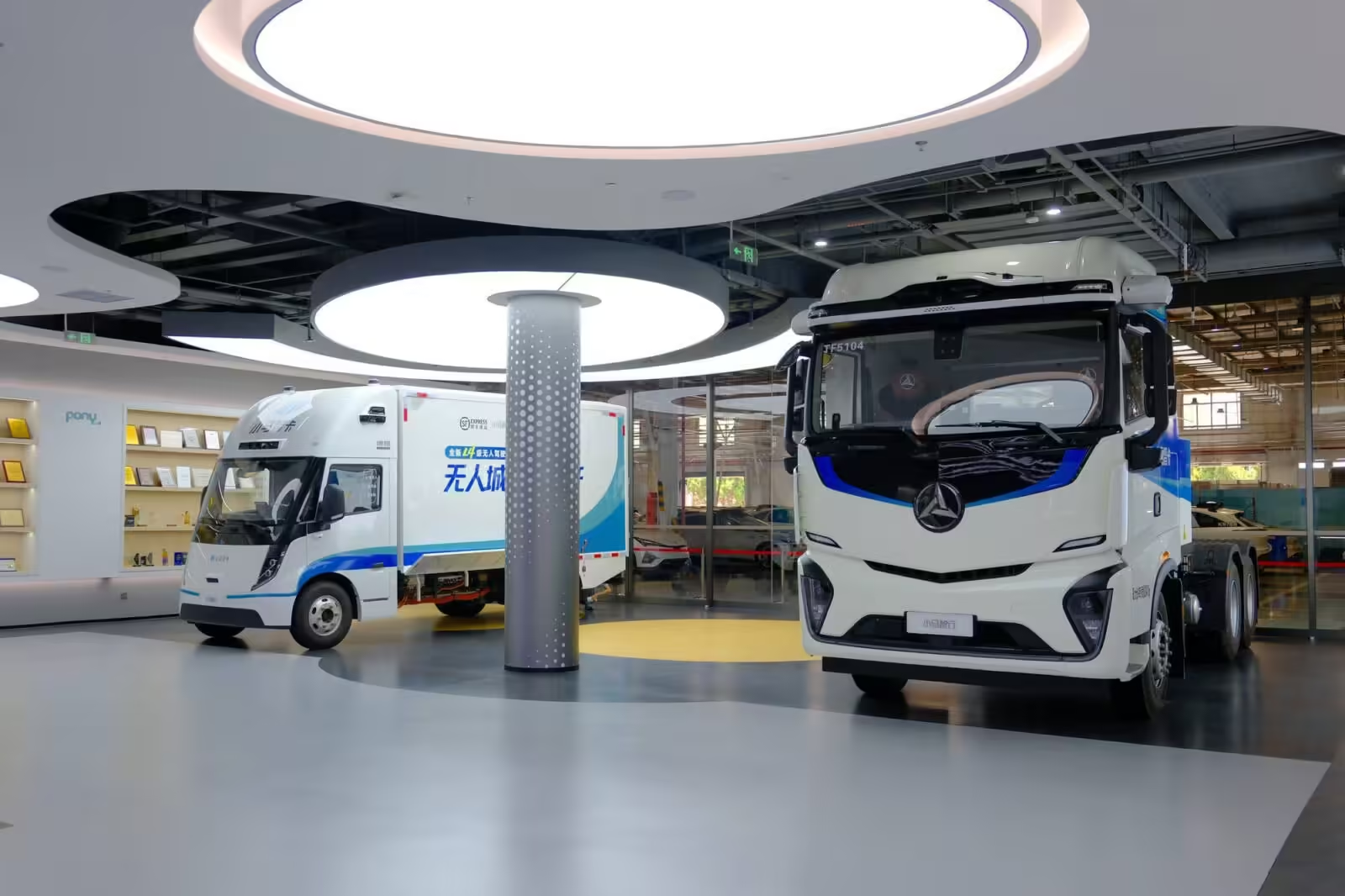
On the freight side, Pony.ai’s Gen-4 robotrucks entered mass production on schedule, and it has unveiled a new Gen-4 heavy-duty model with GAC Commercial Vehicle. It is deploying robotrucks at Jiangmen Port and Shenzhen’s Mawan Port, and its fully driverless light-duty trucks have entered production, with initial deployments under way with logistics customers in China’s tier-one cities.
Loss from operations narrowed slightly to US$68.7m, although net loss widened to US$136.3m from US$61.6m due to fair value losses on trading securities. “Together, these developments across Robotaxis and Robotrucks reinforce our confidence in scaling our autonomous driving businesses across different markets as we head into next year,” said James Peng, Chairman and Chief Executive of Pony.ai.
Robotaxis draw most of the attention, but freight remains Pony.ai’s largest revenue line and depends less on city-by-city passenger permits. With the robotaxi fleet still needing more than 700 additional vehicles in the fourth quarter to hit its 3,500 target, that steadier trucking base matters more than the company’s headlines suggest.
Why this matters:
- Insurers begin pricing autonomy’s safety. Per-vehicle premiums falling to around 40% of those for human-driven taxis suggest insurers are starting to treat robotaxi safety records as quantifiable risk, which could become both external validation and a meaningful operating cost advantage.
- Chinese permits move to city scale. A contiguous Guangzhou operating area of more than 1,000 km² suggests Chinese regulators are shifting from district-level pilots to city-wide driverless permits, enabling longer, higher-fare trips across urban and suburban zones.
- Partners carry overseas fleet costs. Expanding into Zagreb, London and Manchester through a joint deployment model lets Pony.ai grow internationally without owning fleets, though Chinese-developed driving systems are likely to face data security scrutiny in European markets.
Source: www.automotiveworld.com