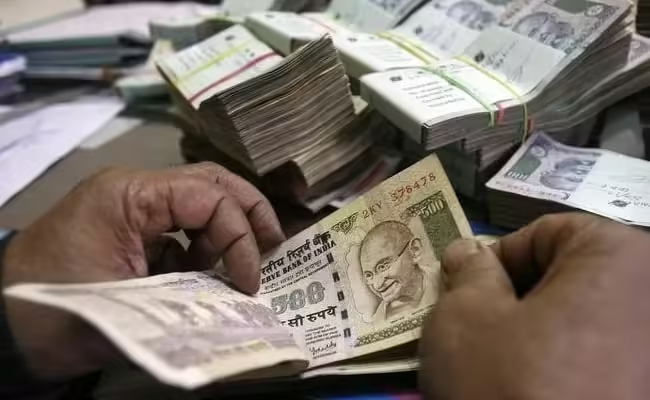

India has QR codes at roadside tea stalls, vegetable vendors accepting UPI payments and millions of people paying bills with a few taps on their phones. Yet, the humble currency note has refused to disappear. Ten years after demonetisation, cash remains an important part of India’s economy, even as digital payments have grown at an extraordinary pace. The numbers tell an interesting story. Currency in circulation has increased from Rs 17.77 lakh crore on November 8, 2016, to Rs 43.16 lakh crore on October 23, 2026 – a rise of nearly 143 per cent.
At the same time, India’s Unified Payments Interface (UPI) processed 25.46 billion transactions worth Rs 31.53 lakh crore in October 2026 alone.
The two trends reveal an interesting “cash paradox”: Going digital has not necessarily meant giving up cash.
Cash Is Still A Big Part Of India’s Economy
The Reserve Bank of India’s (RBI) Annual Report, released in May 2026provides further evidence of the continued demand for physical currency. The value of banknotes in circulation increased by 11.9 per cent during the financial year 2025-26, while their volume rose by 10.5 per cent.
At the end of March 2026, the value of banknotes in circulation stood at approximately Rs 41.24 lakh crore. Including coins, the total value of physical currency was higher.
The trend has continued into the current financial year. Weekly data cited in an analysis by Business Standard put currency in circulation at Rs 43.16 lakh crore on October 23, 2026, up 13.7 per cent from a year earlier.
The central bank conducted a survey of households and small retailers to understand their preference for cash and digital payment methods. Interestingly, its findings pointed to a “continued strong preference for usage of cash”.
The RBI did not publish a detailed breakdown of the survey findings in the report, but the conclusion is significant: The growth of digital payments has not eliminated the demand for physical money.
UPI Is Booming, But Cash Has Not Disappeared
UPI, launched in 2016, has transformed everyday transactions. What began as a relatively new payment platform has become a major part of India’s financial infrastructure. According to government data, annual UPI transaction volume increased from just 1.78 crore in 2016-17 to more than 24,162 crore in 2025-26.
The value of these transactions rose from Rs 7,000 crore to approximately Rs 314 lakh crore over the same period. The growth has continued in 2026. NPCI data show that UPI processed 25.46 billion transactions worth Rs 31.53 lakh crore in October.
This means Indians are increasingly comfortable paying digitally for groceries, restaurant bills, utility services, shopping and even small purchases.
But the expansion of UPI does not necessarily mean that every transaction has moved away from cash. People can use a QR code to pay at a shop and still withdraw money from an ATM for other expenses.
In other words, digital payments have become an additional option rather than a complete replacement for physical currency.
Why Do Indians Still Need Cash?
It’s about the habit. A person may use UPI for everyday shopping but still keep a few thousand rupees at home or in their wallet for emergencies. The money is not necessarily being spent, but it remains available when needed.
An RBI research paper published in 2023titled ‘Cash versus Digital Payment Transactions in India: Decoding the Currency Demand Paradox’, examined this very question.
The research identified two important reasons behind the continued demand for currency: precautionary holdings and the use of cash as a store of value. Put simply, people hold cash not just to buy things but also to feel financially prepared.
The paper also found that the use of cash as a mode of transaction was declining even as demand for currency continued to rise. This shows cash and digital payments can grow simultaneously.
Then there are practical reasons too. Cash remains useful in places where internet connectivity, digital infrastructure or access to banking services may be limited. It also allows transactions without depending on a smartphone, an application or a working network.
For small businesses, daily-wage workers and people who deal frequently in small-value transactions, physical currency continues to offer convenience.
What Do Indians Actually Keep In Their Wallets?
The denomination-wise data from the RBI offer another interesting insight. As of March 31, 2026, Rs 500 notes accounted for 85.5 per cent of the total value of banknotes in circulation.
In terms of volume, however, Rs 500 notes accounted for 41.2 per cent of all banknotes, followed by Rs 10 notes at 16.1 per cent and Rs 100 notes at 15.7 per cent.
This shows that while higher-denomination notes account for a substantial share of the total value of currency, smaller denominations remain an important part of the physical money supply.
The RBI’s data also show that the withdrawal of Rs 2,000 notes, announced in May 2023, has largely been completed. As of March 31, 2026, 98.45 per cent of the Rs 3.56 lakh crore worth of these notes in circulation at the time of the announcement had returned to the banking system.
Source: www.ndtv.com